DDF News — 17 May 2014
Philip Connaughton talks 'Tardigrade'
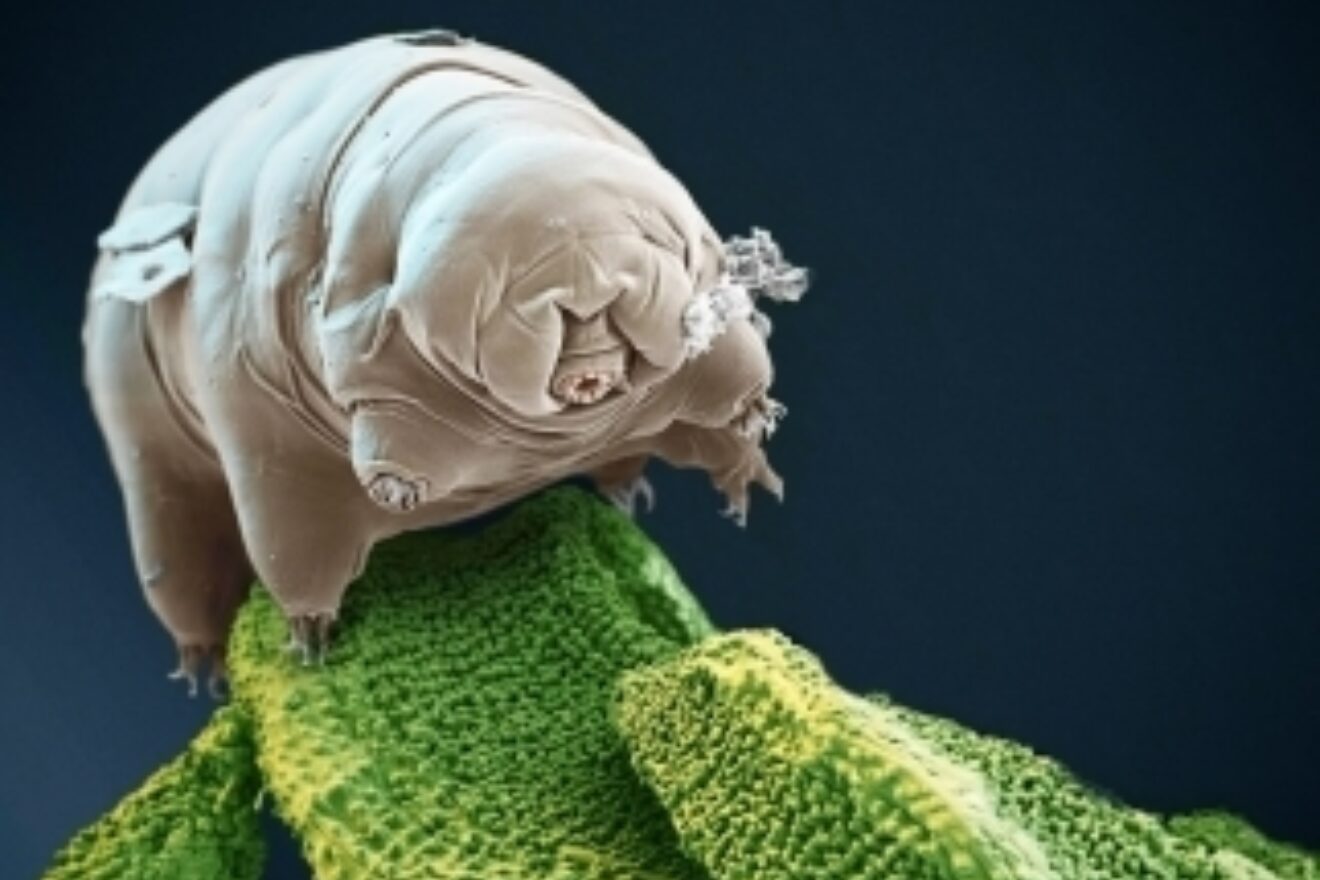
With little background information to go on for Philip Connaughton’s contribution to this year’s festival, I look up ‘tardigrades’ prior to our interview. Included in the class of critters dubbed ‘extremophiles’, tardigrades (from which the show takes its title) are microscopic creatures that can survive in a range of inhospitable conditions (from temperatures just above absolute zero to above boiling point; in the deepest trenches of the ocean; in space; and without any food or water for years at a time). I’m intrigued. What can the show possibly be about? The dawn of life on earth? Immortality? Space travel?
Philip: ‘I’m creating three different worlds, three different realities.’
Inspired by Hieronymus Bosch’s famous three-part painting ‘The Garden of Earthly Delights’, Philip has in mind the realisation of a work that places three separate existences side by side. You’ll know the painting; spread across three panels, it’s a tumultuous cacophony of colour and strange creatures, showing the unravelling of humanity from a place of gracious serenity to a state of degradation.
Philip: '‘There’s a typical Judeo-Christian morality expressed in the work. How the word of God deteriorates through man unless he chooses a very particular path. I’m interested in the inversion of that idea.’
Our conversation oscillates around a host of different influences that feed into the piece, from the Bosch painting, to Charles Fréger’s book Wilder Mann: the Image of the Savage, to Philip’s pet dog, to the tardigrade itself.
Philip: ‘I was trying to find a real creature that could be anthropomorphised. And I came across the tardigrade. They’re everywhere, but we don’t see them. That was the perfect monster for my other reality… They fit in very well in these multiple layers. The character of the tardigrade is sort of all-knowing because it can live in these different worlds.’
‘Tardigrade’ is very much a collaborative work. Composer Michael Gallen works with six singers to create the soundscape, while videographer and photographer Luca Truffarelli has contributed film elements. And then there are the fantastical sounding costumes (the tardigrade character will sport a box carrying four screens on his head) contributed by Emily Ni Bhroin.
Philip explained the concept and set parameters for each of the three artists to work with, afterwards letting them loose on the idea to produce their own interpretation of it. This segregation of the development process was a calculated move to ensure separation between the three worlds shown on stage.
The picture Philip paints of the work as a whole is one of chaos, revelry and sensory overload. From our conversation, I get the impression of a performance saturated with colour, sound, and movement.
Philip: ‘I’m interested in giving the audience too much information. Of blasting them with it.’
This being a work in progress as part of the Re-Presenting Ireland showcase, the performance will only last 15 minutes. But it sounds guaranteed to be one dense, and intense, quarter of an hour.
'Tardigrade' is performed as part of the Re-Presenting Ireland triple bill on Friday 23rd, Saturday 24th, Friday 30th and Saturday 31st of May. Book tickets here.